Monday, August 24, 2015

In The Game - the more things change...


I had an opportunity to attend the premier of In the Game, a film produced by the same company that produced Hoop Dreams.  This film held special significance for me, however.  It focused on the girls' soccer team at Kelly High School, a  Chicago public high school I attended nearly 40 years ago.  At the premier, I was also able to meet and speak with the producer, the principal of the school, and the coach and players that were featured in the film.  A large part of the experience was a nostalgia trip. While the ethnicity, sport, and gender were different, the struggles of trying to be an student athlete, in an underfunded school with few resources in blue collar, immigrant neighborhood resonated with me.  The film centered on these beautiful, spirited young women, trying to make something of themselves, using soccer to build the life skills needed to succeed in life and transcend this tough, poor, gritty (and now gang infested) neighborhood.  The movie struck a chord of both empathy for the girls and a deep sense of nostalgia.

The film did a great job of depicting the Brighton Park neighborhood and highlighted it as an immigrant gateway, showing the transition from a primarily Polish and Lithuanian enclave to a Mexican one.  The houses and parks still looked very familiar to me decades later, although most of the stores have changed and the red, green and white colors of the Mexican flag adorn many of them and many houses have symbols of Catholicism both inside and outside their homes.  The neighborhood is appreciably poorer (the head of the Brighton Park neighborhood council asserted an 86% poverty rate).  Many of the manufacturing companies that supported families in the 50's, 60's and 70's have moved out.  It appears that many people support themselves with little micro businesses and retail shops.  Of course, the other significant change since I grew up is the infiltration of gangs and gang violence.  Just last week, there was a gang related killing at 47th and Western, just a few blocks from my home.  And the film noted that the soccer team was forced to change practice fields because of the threat of gang violence.

Still, I couldn't help feeling a connection with these athletes.  One girl noted, "When I am on the field, everything else disappears."  It was inspiring to see these girls battle through family difficulties, poverty, and lack of infrastructure and resources to work hard and play hard every day.   In the suburbs, similar girls start with travel soccer, have personal trainers, and sometimes tutors.   These girls have to do it largely on their own grit and determination and a very devoted and dedicated coach.   Most of the girls at Kelly do not have money to go to college and have to rely on aid, loans and part time jobs.  It's very difficult for any to go straight through to a 4 year college.  It appears most start and stop through community college.   You can't help but cheer for these girls, any one of which you would be proud to have as your daughter.  The coach, a Kelly graduate of Polish heritage is a both a beacon of hope for these girls and a bridge between generations and waves of immigrants. His unyielding optimism and can-do spirit clearly infects his players.

Of course, as Orwell put it, "all art is propaganda," and this film has a political message to it, both in terms of immigration policy and school funding.  Some of the girls are undocumented and Kelly was subject to pretty draconian budget cuts.  Ironically, the very next day, the Chicago Tribune ran a long piece on the financial condition of the Chicago Public School system and the gross financial mismanagement of it and its pension system.

These girls deserve so much more.  It is heartbreaking to see them caught in a system that was largely constructed and run for the benefit of the unions and politicians and not for the kids.  But simply giving more money to a broken system will not solve the problem.  Twenty percent of funding now goes to pay pension costs and service debt.  That leaves precious little for aspiring student athletes like these girls.

The film underscored for me that the system needs radical reform, not just meddling at the edges and taking holidays from payment into the pension system.  The system needs to go into bankruptcy, with material adjustments to the union contract (so bad teachers can be fired more easily), the pension system, "sweetheart" contracts, and the like and the system needs to be rebuilt under court supervision.  That is the only way I see these kids getting a fair shake.

The filmmakers did a good job of evoking an emotional reaction--it is what good films do.  But the solution that has a chance at fixing the problem may be different than the one they intended.

Monday, August 10, 2015

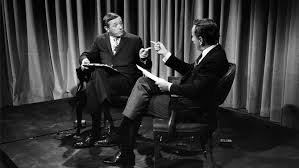
Best of Enemies

I was seriously misled by the title of this movie. 
There are several progressive friends of mine with whom I engage in verbal and email debates, and while these engagements can be quite spirited and heated and occasionally devolve into mostly good natured potshots at each others’ arguments and selective treatment of factual information to support arguments, we remain friends.  This is kind of relationship between William F. Buckley and Gore Vidal that the title of the film about the debates between them during the 1968 conventions suggested.

It couldn’t have been farther from the truth.  I expected to see a film about two antagonists that ultimately respected each others’ intellect and liked each other personally.  While the former may have been true to some extent, Buckley and Vidal really did despise each other.  The true enmity between them dripped throughout the film.  Each man saw each other as dangerous and the embodiment of evil, and the antipathy that reached a crescendo  with Buckley threatening Vidal with physical assault on air, calling him a “queer” for calling Buckley a “crypto-Nazi.”  Later, Buckley sued Vidal for publishing an article that challenged Buckley’s sexuality.  This battle between titanic intellects got mean and personal.

The film contained three themes that made it a must see for those interested in public discourse:  the stark contrast and deep antagonism between these two men that has carried over into our divided politics today, the debates were a timepiece of history and media (there were only 3 major networks), the explosive Democratic National Convention was going on, and the Vietnam War and perceived breakdown of law, order and social mores was occurring.  But the last, and in my mind, not least important,  theme enveloped me in sadness—to see these two powerful intellects wane in terms of influence and sink into old age and death.  In particular, I was taken by Buckley’s statement near the end of his life that, if given an opportunity to take a magic pill that would make him 25 years younger, he would decline, and that he was “tired of living.”  Likewise, you could feel the pain that Vidal felt toward the end when he realized that “no one reads his books anymore,”  after toiling for a lifetime and pouring his soul into them. 

This film was significant for me.  Bill Buckley had a strong influence on my thinking when I was a young man and inspired my intellect.   Best of Enemies gave me an opportunity to see a side of him that I had not seen before.   While I had lionized Buckley, the movie showed a human side of WFB that I had not seen before and  suggests strongly  that Vidal ultimately prevailed in this contest, primarily because Vidal had gotten under Buckley’s skin so badly that the usually controlled and affable Buckley threatened him.  Buckley himself  recognized  that this incident was not a shining moment in his career. 

But I have a different view.  While Vidal certainly left behind a larger body of written work, Buckley’s intellectual and political influence was much wider.  He was certainly a factor in the election of the most significant political figure in my lifetime-Ronald Reagan, a president even Barack Obama tries to compare himself to.  Reagan’s conservative core has spawned a new generation of politicians that carry his banner—Scott Walker, Marco Rubio, Ted Cruz and Mike Pence, all hoping to emulate him.  Vidal did not carry that much influence.

Unfortunately, conservatives have not yet found a person that is capable of serving as the intellectual standard bearer.  Laura Ingraham and Mark Levin have some following.  Neither has the intellectual depth.  Perhaps the nearest to Buckley’s intellectual level is Charles Krauthammer, but Krauthammer does not have Buckley’s charm or wonderfully biting sense of humor.


Perhaps there will never be another.

Friday, July 24, 2015

The Eastland and Government Regulation

Today marks the 100th anniversary of the capsizing of the S.S. Eastland in the Chicago River, trapping and drowning 844 passengers, most of whom were Western Electric employees on a family picnic.  Of the 844, most were women and children and over 250 were teenagers or young children.  This disaster has a place along with the Chicago Fire and the Iroquois Theater fire as the deadliest and most scarring in Chicago history.  The photos found on the internet of bodies being recovered still haunt today, and recently actual film footage was recently discovered in Europe (www.eastlanddisaster.org).

For years, many theories and myths surrounded the causes of the disaster.  A common tale passed down was that the passengers all moved to one side of the boat to witness a commotion on land.  That theory turned out to be a myth.  In 2005, George Hinton published a well researched book, Eastland: Legacy of the Titanic.  Hinton documented the construction and history of the ship and consulted with maritime engineers.   The Eastland had a history of stability issues from the start.  But the government regulation that required a place in a lifeboat for every passenger turned out to be a major contributor to this catastrophe [although that conclusion has been disputed by Michael McCarthy in his recent book : Ashes Under Water: The SS Eastland and the Shipwreck that Shook America].  The Eastland was not designed to carry the lifeboats and could not handle the additional bulk and weight.   As a result, in a matter of minutes, on that fateful July day, hundreds of lives were cruelly snuffed out.

We should never forget that tragedy.  But we should also never forget the real consequences when government regulation is blindly applied.  As Nassim Taleb so wisely noted in his book Antifragile, government often inadvertently and tragically increases risks when trying to control them.

Thursday, July 16, 2015

If You Like Your Centrifuges, You Can Keep Your Centrifuges... Really

There are lots of happy faces in Tehran this week.   Not since the U.S.S.R. invaded Afghanistan and deployed intermediate range missiles in Eastern Europe have I so feared for the survival of the West.   Fortunately, we had Reagan and Thatcher (and Helmut Kohl) to pull our chestnuts out of the fire that time.   Despite the howling of the nuclear freeze crowd and the overt mocking of Ronald Reagan as the "amiable dunce" and the "simpleton warmonger,"  Reagan knew when to compromise and when to walk from a deal, as he wisely did in Reykjavik when he refused to commit not to deploy the strategic defense initiative (derided by Ted Kennedy and others as "Star Wars."

Well, the nuclear freeze, medal tossing folks are in charge of our national security now and it shows.  Less than 90 days after the Chinese launch a major cyberattack on a pitifully exposed OPM database protected by a washed up school administrator, the Iranians, starting from a position of complete weakness, and on their knees economically, ran the table on Team Obama.   Others have written more fulsome analyses of this catastrophic "deal" so I will just highlight the few points that I find most repugnant.


  • $140 billion signing bonus.  Money is fungible.  Tehran has extended a line of credit to Bashar al-Assad.   Therefore, the United States is a large financier of terrorism in the Middle East.  For the sake of full transparency, I propose that all Hamas missiles now bear, "Financed by U.S.A. and E.U." labels on them.
  • We left 4 Americans hostage in Iran that were not part of the deal.  Perhaps we should be thankful that the mullahs did not demand more.  But we released 5 Gitmo jihadis for deserter Bergdahl because of our commitment to "do everything we can to bring him home."  To facilitate this "deal," however, the 4 Americans can rot.  
  • The U.S. has committed to cooperate with Iran to thwart Israeli sabotage to their nuclear program.  Evidently, Stuxnet really pissed off the mullahs.  So, now we have to turn our friends, the Israelis in to the authorities if they try that again.  The mullahs now want us to take on the role of Capos, which we have agreed to do.
  • After the Chairman of the Joint Chiefs of Staff Martin Dempsey exclaimed, "Under no circumstances should we relieve pressure on Iran relative to ballistic missile capabilities and arms trafficking," we promptly agree to the military embargo in 5 years and ballistic missile technology in 8.  So, Obama is willing to sunset restrictions on a terror state and give an explicit timetable for that expiration.  For the Canadians that want to build an oil pipeline in the U.S., however, Obama grants no such timetable for relief.
Of course, Team Obama framed this up as a take this deal or war choice, which was a false choice, and always was.  There were plenty of options other than total war that were available to us.   

This "deal" confers legitimacy and power on a tyrannical and authoritarian regime that remains committed to destroying Israel AND the United States.  It all but ensures that Iran will become a nuclear power and sooner rather than later and cements the hold of the regime on that country.  

Eventually, Israel will have to take matter into its own hands.   If we learned one thing from the Third Reich, it's that evil people most often mean what they say.

Neville Chamberlain, you've been one upped.


Tuesday, July 14, 2015

Words and Symbols

I was taken aback by the Pope Francis's full throated attack on capitalism a couple of weeks ago and wrote a spirited response to His Holiness.  His views were not simply an appeal for people to do more to help the poor, but an assault on capitalism itself.  This assault came within weeks after I attended a panel discussion of three Nobel Laureates who showed that capitalist reforms were responsible for lifting hundreds of millions out of abject poverty in China, India and elsewhere and that it is starting to do the same in Africa.

The Pontiff ratcheted up the rhetoric on his trip to South America, deriding the pursuit of money as "the dung of the devil." His words harkened to Hugo Chavez's attack on George Bush at the U.N. in '06,"The devil came here yesterday.  And it smells of sulphur still today."  Chavez further skewered Bush, "As the spokesman for imperialism, he came to....preserve the current pattern of domination, exploitation, and pillage of peoples of the world."  The Pontiff echoed these thoughts almost precisely, "Once capital becomes an idol and and guides people's decisions, once greed for money presides over the entire socioeconomic system, it ruins society, it condemns and enslaves men and women, it destroys human fraternity, it sets people against one another and, as we clearly see, it even puts at risk our common home."  The Pope went on to call for "overthrowing an empire of money," and denounced "the new colonialism."   His themes and even his choice words were virtually indistinguishable from those of Chavez;  the former Venezuelan president has evidently been reincarnated with a miter.  

But it gets even worse.  Over the last few weeks we were caught up in the symbolism of the Confederate flag because many found that it symbolized slavery and bigotry.  I understand the power of symbols. When Evo Morales, president of Brazil  offered a gift of a crucifix shaped like a hammer and sickle to the Pope, while initially surprised, accepted it and later affirmed that he was not offended by it.

By heritage, I am part Lithuanian and Polish and grew up in a neighborhood with others from the former Eastern bloc.  I heard the stories of the murder, torture and starvation perpetrated by the Stalin regime under the symbol of the hammer and sickle.  My best friend's father witnessed his buddy shot in the head on a road in the Ukraine by the KGB.  The parents of another childhood friend of mine escaped one of Stalin's concentration camps in Siberia, and were chased by dogs through the woods before it to America.  Because they were schoolteachers, they were deemed part of the intelligentsia and would certainly have been killed.  There were millions like them that suffered under the boot of Communism (for an excellent novelization of the Lithuanian deportations, read Between Shades of Grey by Ruta Sepetys).

The hammer and sickle represent death, torture, and tyranny to me and nearly everyone I grew up with.  It is no less offensive to me than the swastika is to a Jew.  That the Pope chooses words that are nearly identical to those of Hugo Chavez and chooses to accept a symbol of death to my people tells me that I may not have a place in this Church while he is its leader.  His recent exhortations are antithetical to all the values I hold dear.  Indeed, freedom, democracy and capitalism have provided a decent, dignified life and have liberated more people across the globe than any other system.  It is the brutal, corrupt regimes that fly under the banner of the hammer and sickle that crush the human spirit, brutalize and impoverish.  As a result, I am taking a sabbatical, a trial separation from the Catholic Church and I do not know if I will be back.  I cannot be part of an organization that would so willingly embrace the symbols of totalitarianism and reject the things I hold most dear. 

Saturday, July 11, 2015

Getting It So Wrong!

It's been a tough few weeks for advocates of individual liberty, capitalism, and the rule of law.   The competency and fiscal responsibility of the State has been on full display over the past few weeks.  Yes, government tried to make us feel better by bathing the White House in multicolored lights to celebrate the Supreme Court decision on gay marriage and there was lots of self righteousness on display as South Carolina was pressured to pack up its Confederate battle flag (has anyone even thought about that flag over the past 20 years?) in the wake of the tragic killing of 9 black churchgoers by a lone sick white supremacist.

But instead of all the hoopla over 150 year old flag, perhaps a better discussion should be around risk assessment and the competency of the state to deal with those risks.

And this administration's batting average in its priorities and actual actions in this area have been atrocious and, indeed, frightening.

  • Yesterday, Katherine Archuleta, director of OPM resigned after it was discovered that the Chinese had hacked into the OPM system and swiped the records of 21 million federal employees, which records included sensitive information and social security numbers.  Many have called this intrusion the equivalent of Pearl Harbor, yet we get no statement or strategy from the President.  This fiasco comes on the heels of the botched rollout of the Obamacare website.  Perhaps Archuleta and Sebelius should start an IT consulting firm that develops websites that are too clunky to be hacked.
  • After mocking Romney mercilessly for asserting that Russia is our largest geopolitical threat, Obama's nominee to the head the Joint Chiefs now says that Russia poses an existential threat to the U.S. and that it's recent geopolitical actions are, "nothing short of alarming."
  • Of course, Obama's derision of ISIS as the J.V. stands as one of the largest blunders in assessment of all time as ISIS continues to ravage whole swaths of the Middle East and North Africa, murdering and destroying antiquities in the greatest display of genocide since Srebrenica.  After months of admitting he had no strategy, Obama last week said that "Ideologies are not defeated with guns.  They are defeated by better ideas and more attractive and more compelling vision."  That was it.  After months of not having a strategy, our strategy appears to rely on Obama's powers of persuasion.  Good luck with that.
  • Now we learn that the South Carolina shooter, Dylan Roof's background should not have permitted him to have a firearm but that the FBI did not log him properly into its system.  So we can pass laws and take down flags if that makes us feel better, but again, lack of execution on the part of the government has turned out to be the real culprit.
  • Undeterred by the consequences of the last time government meddled in housing markets, the Obama administration launched new rules attempting once again to discover "patterns of segregation".  It is a heavy handed way to force upper crust communities to house the poor in their midst.   Evidently current fair housing laws aren't enough, so the federal government has to meddle even more into people's local communities. What could possibly go wrong?
  • Kate Steinle, a beautiful young woman, dies in her father's arms, crying, "Daddy, help me" after an illegal immigrant shoots her in the back.  The perpetrator was deported multiple times but was protected by San Francisco under its "sanctuary (read: defy federal law) laws."   There is no comment from President Obama (Maybe, "she was a beautiful young woman just like my daughter").   Why is it not OK for a state to defy federal law on gay marriage but it is fine for local governments to defy federal law on immigration?
  • After Ferguson, the Obama justice department descends on local police departments to ensure that police aren't unfairly singling out black youths for heavy handed treatment (while offering no evidence that this was epidemic).  The result-- murder rates and violent crimes have spiked. Obama policies have actually caused more deaths in the black community.
  • The Iranian negotiations drag on despite the ridiculous demands of the mullahs and our constant retreats.  No anytime anywhere verifications.  No divulging history of its past nuclear activities.  No "snap back sanctions."  A $150 billion signing bonus.  All while the Iranians affirm their commitment to wipe Israel off the face of the map and their parliament and citizens are chanting "Death to America."  The esteemed Henry Kissinger and George Shultz have warned Obama not to do this deal.  Yet he plows ahead anyway.

This is just a depressing sample of the horrendous judgment (and misjudgment) of this administration.  I can't remember a president that was so consistent in making bad calls, and then either having no strategy, or a strategy that is certain to result in the opposite of what is intended.

Saturday, June 20, 2015

No Hope for the Pope

 When Pope Francis was elevated to lead the Catholic Church, I had high hopes for him.  He eschewed the regal trappings of the role, opting for more modest dress and living quarters.  He immediately began to signal that he wished to de-emphasize sexuality as a centerpiece of church doctrine.  He halted the hostile takeover of the Leadership Conference by Women Religious (organization of American nuns) by bishops from the Vatican.  He took steps to clean up the Vatican bank.  These steps were even noted at the Booth School of Business at the University of Chicago in an article by Italian Catholic professor Luigi Zingales, praising his management skills (http://www.chicagobooth.edu/capideas/magazine/winter-2014/is-the-pope-a-good-manager).  As a fairly recent returning Catholic, I viewed a Pope that could turn the Church into a modern institution that understood the realities of the real world as a welcome development that could steer the Church away from the rigid, imperious, hierarchical, doctrinaire church I left so long ago.

The Pope's encyclical on climate change and economics smashed all that.  The Pope could have and should have said we need to be good stewards of the environment and that the wealthy have a moral obligation to find ways to help those less fortunate.  That's it.  But that is NOT what he said.  Instead, he launched into a diatribe against a "perverted economic system" and condemned the "short-term consumerist patterns" and that people allowed technological and economic paradigms to tell us what our values ought to be."  Richer nations should hand over "superfluous wealth" to poorer ones. "Those who possess more resources and economic or political power seem mostly to be concerned with masking the problems or concealing their symptoms,"  he asserts.   As a result of the consumer oriented West, the poor of the world are being exploited and the environment is being turned into "an immense pile of filth".  This view, in essence, is pure Obamunism--the notion that the West has exploited the poorer nations for their labor and resources.  Not content with making statements on helping the poor or taking care of the environment, he launches a frontal attack on capitalism.

The Pope inveighs against our "perverted economic system." What system does the Pope think will be an improvement?  Communism?  Feudalism?  Monarchy?  Military juntas?   We have tried all those.   It is only when capitalism begins to take hold that we see poverty lifted.  One need only look at poverty levels in all of Asia to see what liberalization has done.  All other systems in which the State controlled production have ended in disaster, misery and, often, mass murder.  Is that what the Pope wants?  Does he want to replicate his homeland?  Argentina should be a wealthy country.  Instead, it is a basket case, in constant turmoil and economic crisis caused by its redistributive policies.

Moreover, how are we supposed to transfer "superfluous wealth" to poorer countries?  Who seizes the wealth?  Who decides what is superfluous?  Why is that a better use that using that wealth to invest in companies, people and technologies that have promise?  Are we, in the West, supposed to hand it over to corrupt and authoritarian regimes that have impoverished these people?  Or distribute it directly?  Isn't it better that these people rise up and rid themselves of the thugs that rule them?  Has he not seen that these very regimes are much more devastating to the environment than liberal democracies?

The Pope also took issue with technology and progress.  What part doesn't he like?  The amazing medical breakthroughs that have eased the suffering of so many?  The drugs that have conquered devastating illnesses?  Does he not like the technology that has revolutionized agriculture, permitting us to feed millions more cheaply and on less land and control pests?  Or the advances in methods of distribution that permit us to deliver more and better food to more people more efficiently?  Or does he not like the technology that permits me to respond to my daughter instantaneously even when she is half a continent away?  Or, perhaps it is the technology that developed fracking and permitted the U.S. to move away from coal as an energy source?

He asserts that, "some people continue to defend trickle-down theories which assume that economic growth, encouraged by a free market, will inevitably succeed in bringing about greater justice and inclusiveness in the world.  This opinion, which has never been confirmed by the facts, expresses a crude and naive trust in the goodness of those wielding economic power and sacralized workings of the  prevailing economic system." As a counterfactual, I offer Robert Lucas's observation that, "the poor in China, i.e., those subsisting on less than $1 a day, look very different today than they did 35 years ago."  Are we to exclude these millions, along with the millions in India and elsewhere in the Far East and now, increasingly in Africa, from the Pope's calculations?   

The Pope's encyclical echoes of Paul Ehrlich's work of 45 years ago (which I have read) and whose predictions were wildly wrong.   The advocates of "limits to growth" rely on extrapolation of data, i.e., "if present trends continue," blah, blah, blah.  But present trends never continue.  Things change. Technologies emerge.  This is the same crowd that talked about a new ice age 40 years ago, "peak oil" (we are now drowning in the stuff), and Ehrlich predicted worldwide mass starvation by the 1980's (actually, we have an obesity problem).

Finally, does he not see that his "limits to growth" position directly contradicts the Church's position on abortion and birth control?  More people, less innovation,  elimination of economic incentives will lead inexorably to something that looks more much more like North Korea or Cuba than the relatively prosperous, educated, healthy, and happy societies we have in the West.

Yes, I am skeptical of the climate change hysteria.  The Pope's encyclical, like Al Gore's book, is riddled with errors and massive errors in logic.  But most insidiously, it is a condemnation of a form of government and economic system that has alleviated more poverty, brought more justice and respect for individuals and individual rights, eased more suffering and has evidenced more respect for the environment than any other.  The Pope has joined in the chorus of people that wish to use climate change to advance their own agenda for a much larger role of government that will ultimately dictate how we should live.

There are many (and I among them) give as much credit Pope John Paul II as Ronald Reagan for the collapse of Communism.  He saw the devastation that system wrought on the human condition, and he rejected it entirely and helped to hasten its downfall.  Francis, in contrast, is using the climate change boogeyman to embrace and promote the redistributive policies of HIS native land, which have sent that country into a tailspin (http://www.economist.com/news/briefing/21596582-one-hundred-years-ago-argentina-was-future-what-went-wrong-century-decline).

The Pope has strayed far afield from his span of knowledge and waded directly into science and economics and has mixed them in a way that has proven itself time and time again to be toxic and deadly to the human condition and has pitched rocks at the system that has by far the best track record of elevating humanity.  I am shocked and dismayed by his hubris and overreach.  I can't help but conclude that he is not much better than the left wing populist politicians that have so ruined the economies of Latin America and South America and is merely pandering to his constituency.

For the second time in my life, I am in a crisis over my religion and am contemplating leaving the Catholic Church.  Several years ago, I answered the "Catholics Come Home" initiative, which attempted to bring back Catholics that had fallen away and attempted earnestly to practice my faith again.  After a promising start, Pope Francis has shaken my relationship with the Catholicism in a significant way.  I will have to think hard about whether I remain with this institution.  If I do, it will certainly be with much less enthusiasm.